Prepared
Trained in essential care and safety practices.
Our training program
One training standard — for the people who join us, and the families who rely on us.
Before any caregiver visits a family, they go through the same structured program: classroom foundations, hands-on skills practice, a supervised practicum, and certification. Nobody skips a step.
If you're exploring a career in caregiving, this is what you'll learn. If you're choosing care for someone you love, this is what every TLC Care caregiver has already been through.
One standard, two paths
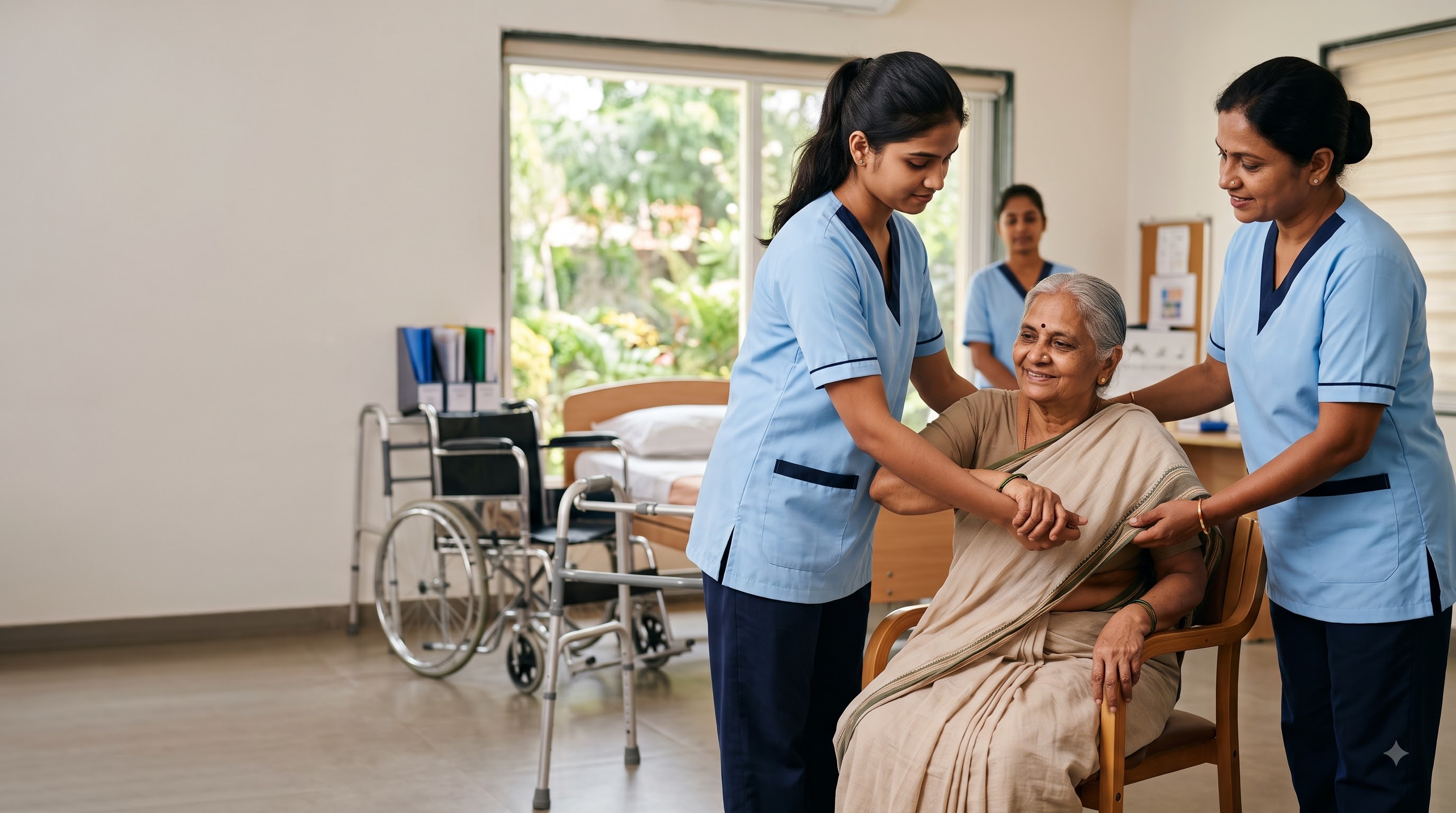
We don't run a lighter version of training for placements that feel urgent, or a shorter one for roles that feel junior.
Every caregiver — regardless of role or client — completes the full program before their first unsupervised visit, and returns for refresher training throughout their time with us.
What every caregiver learns
Quality care for elderly or disabled clients takes a balance of core clinical skills, environmental awareness, and strong interpersonal attributes. Tap a pillar to see what it covers.
Supporting everyday activities with dignity, safety and respect.
What caregivers learnTopics include
Recognising changes and supporting safe day-to-day care.
What caregivers learnTopics include
Creating a safer environment for clients and caregivers.
What caregivers learnTopics include
Adapting care to individual needs and abilities.
What caregivers learnTopics include
Because good care is about more than clinical tasks.
What caregivers learnTopics include
What families can expect
This is what the training above means day to day. Every TLC Care caregiver is:
How training works
Core caregiving knowledge, safety standards, and TLC Care protocols.
Practising mobility support, hygiene assistance, and emergency response with instructors.
Real caregiving shifts alongside an experienced caregiver, before working solo.
A practical and knowledge assessment before a caregiver is certified and placed.
Ongoing skills updates and clinical education throughout every caregiver's career with us.
Training in practice
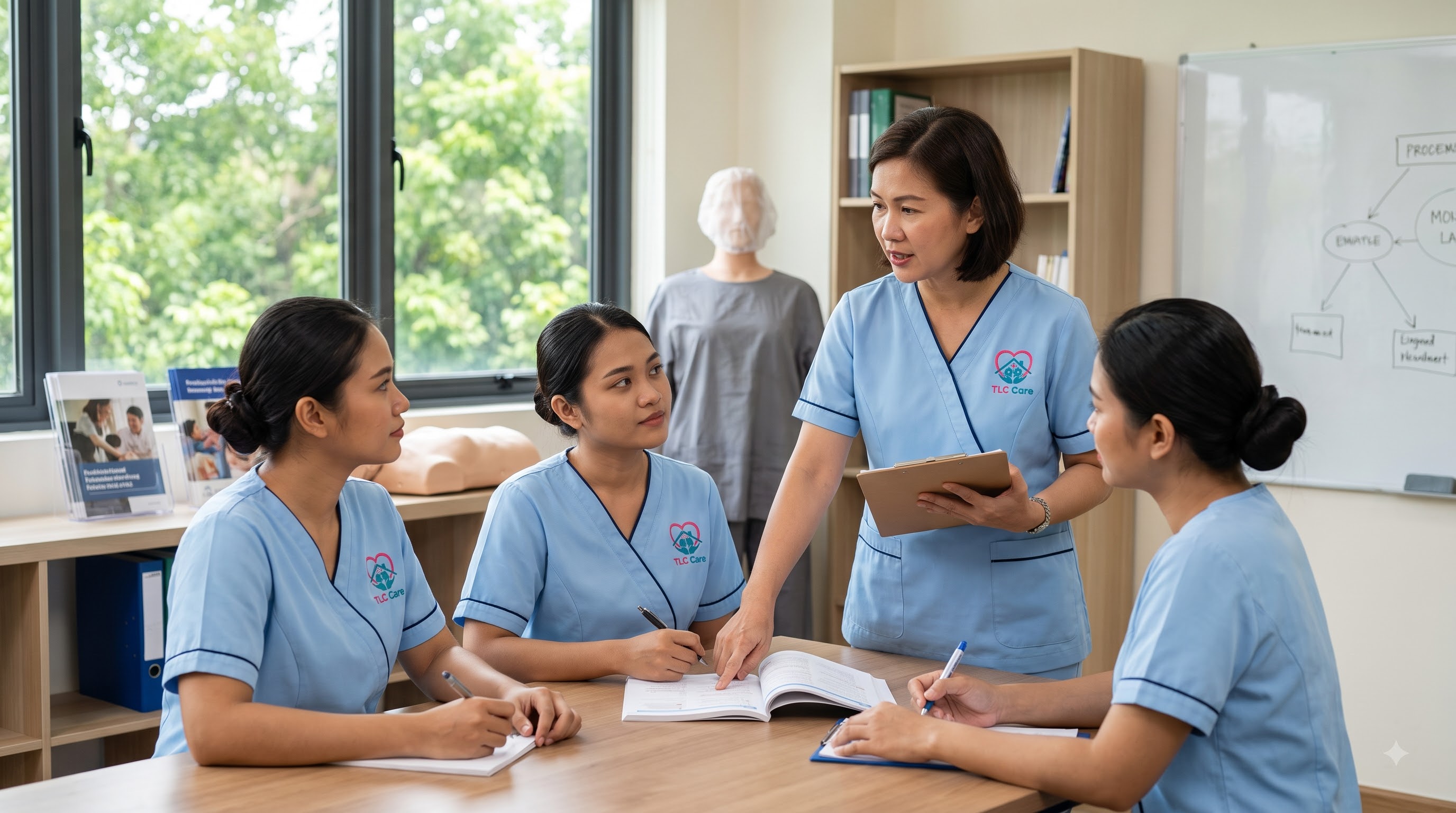
Mobility support, patient handling, and emergency response are rehearsed hands-on under instructor supervision — so the first time isn't in a client's home.
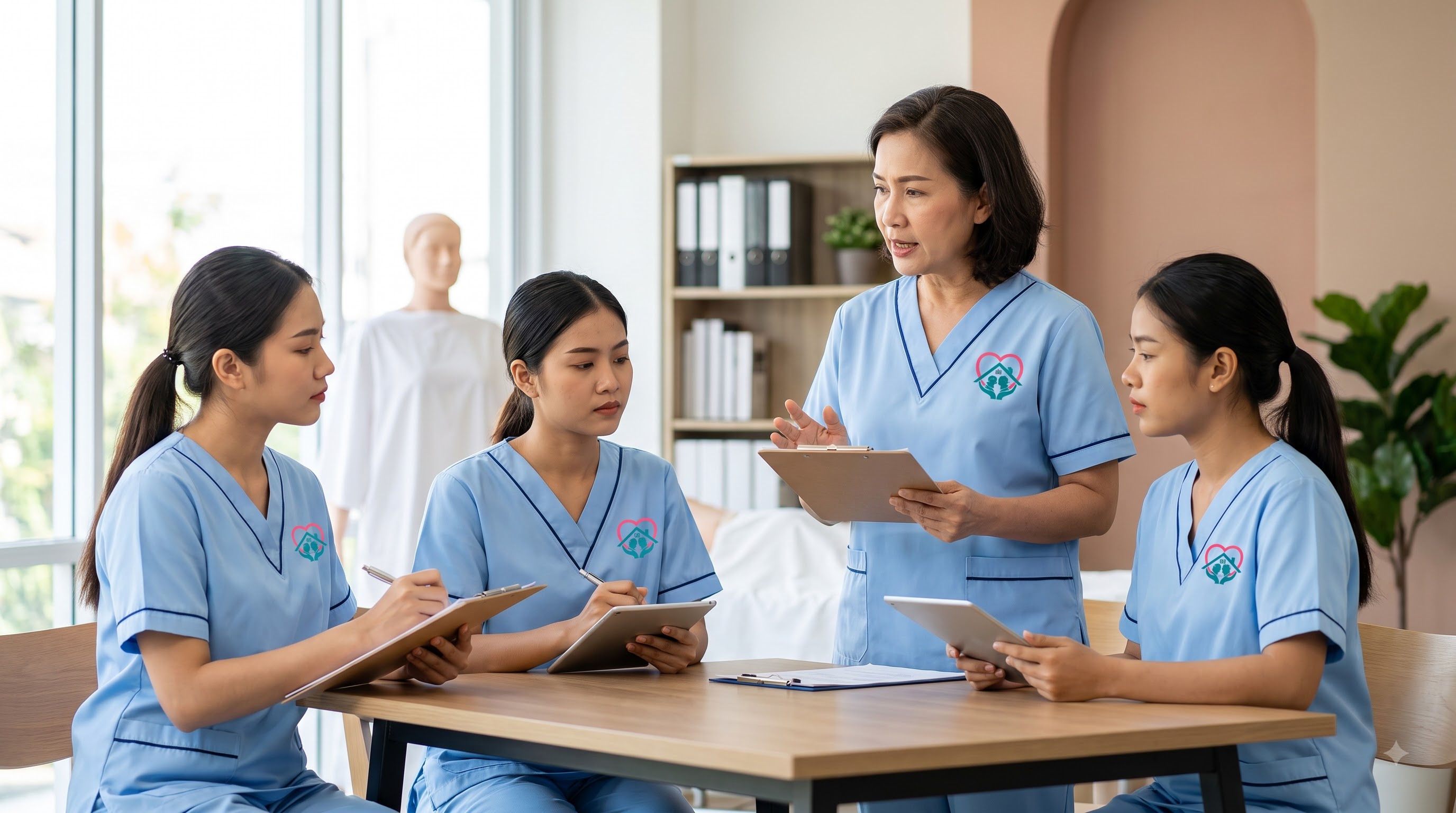
Build a caregiving career with structured, paid training behind you — or trust a caregiver who has already completed it.